


Chinch Bugs and Grubs: How to Spot (and Stop) Lawn Pests Before They Kill Your Turf
June 19, 2026
How to Keep Pests Away from Your Outdoor Events This Summer
June 19, 2026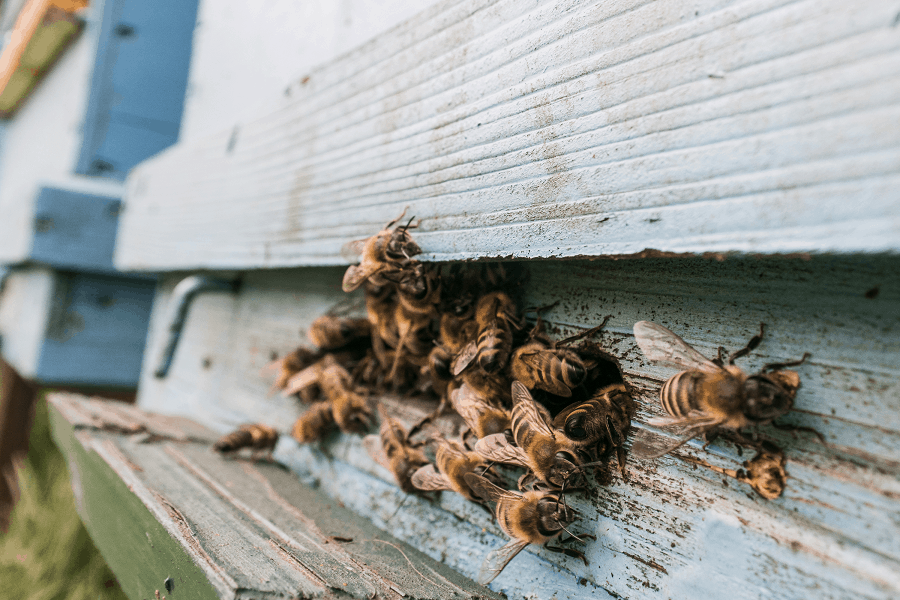
If you’ve noticed flying insects around your home this spring or summer, you’re not alone. Oklahoma homeowners regularly encounter a variety of stinging insects, including wasps, bees, hornets, and even a few look-alikes that can cause concern. While some of these insects play an important role in the environment, others can become a safety risk when they build nests close to homes, patios, play areas, or entryways.
Knowing the difference between common Oklahoma stinging insects can help you recognize potential hazards and understand when it’s time to call a professional.
How Can You Tell the Difference Between a Bee and a Wasp?
At first glance, bees and wasps can look similar, but there are several noticeable differences.
Honey bees tend to have rounder bodies covered in fine hairs that help them collect pollen. Their coloring is usually golden brown with darker stripes. Wasps, on the other hand, have smooth, shiny bodies with narrow waists and longer legs. They often appear more aggressive because they’re frequently seen hunting insects or investigating food sources around people.
When comparing a paper wasp vs honey bee, the body shape is usually the easiest clue. Paper wasps have long legs that hang beneath them while flying, while honey bees appear more compact and fuzzy.
This distinction matters because bees are generally focused on pollination and are less likely to sting unless threatened. Wasps are more territorial and may sting if they perceive someone is too close to their nest.
What Types of Wasps Are Common in Oklahoma City?
Several wasp species are commonly found throughout the Oklahoma City area.
Paper Wasps
Paper wasps are among the most frequently encountered stinging insects around homes. They build umbrella-shaped nests beneath eaves, porch ceilings, deck railings, and outdoor structures.
These nests are usually easy to spot because the open cells are visible from below. While paper wasps aren’t always aggressive, they will defend their nests if disturbed.
Yellowjackets
Yellowjackets are often mistaken for bees because of their yellow and black markings. Unlike bees, however, they have smooth bodies and can become extremely aggressive when their nests are threatened.
Many yellowjacket colonies build underground, making them especially dangerous for homeowners mowing lawns or working in landscaping. A disturbed nest can result in multiple stings within seconds.
Mud Daubers
Mud daubers are generally less aggressive than other wasps. They create distinctive tube-shaped nests made from mud, often attached to walls, garages, sheds, and covered patios.
Although they can sting, they rarely do unless directly handled.
Are There Hornets in Oklahoma?
Yes. Homeowners occasionally encounter hornets and large hornet-like insects throughout Oklahoma.
The bald-faced hornet is one of the most recognizable species. Despite its name, it is actually a type of wasp. These insects build large gray, football-shaped nests that are often suspended from trees, shrubs, utility poles, or the sides of structures.
Hornet nests in Oklahoma can grow surprisingly large by late summer. Because hornets aggressively defend their colonies, attempting to remove a nest without proper equipment can be extremely dangerous.
If you notice a large aerial nest on your property, keeping a safe distance and contacting a pest professional is the safest option.
What Is a Red Velvet Ant?
One of Oklahoma’s most unusual stinging insects is the red velvet ant.
Despite its name, the red velvet ant Oklahoma homeowners encounter is not actually an ant at all. It is a wingless female wasp covered in bright red or orange hair.
These insects are often seen crawling across sidewalks, driveways, and open areas during warm weather. Their vivid coloring serves as a warning to predators. They’re sometimes called “cow killers” because of their extremely painful sting.
Fortunately, red velvet ants are not aggressive and typically sting only when handled or accidentally stepped on. Still, homeowners should avoid touching them and teach children to admire them from a distance.
When Are Stinging Insects Most Active in Oklahoma?
Stinging insect activity typically increases during spring and reaches its peak in late summer and early fall.
Oklahoma’s warm temperatures create ideal conditions for colony growth. As nests become larger, workers become more protective and aggressive. During late summer, many species also begin searching for sugary foods, which is why outdoor gatherings often attract unwanted visitors.
Homeowners may notice increased activity around:
- Outdoor dining areas
- Trash cans
- Gardens and flowering plants
- Decks and patios
- Rooflines and eaves
- Playgrounds and swing sets
The sooner nesting activity is identified, the easier it is to address before colonies expand.
What Should You Do If You Find a Nest?
Many homeowners are tempted to remove wasp or hornet nests themselves, especially when they’re visible and seemingly accessible.
Unfortunately, DIY treatments often create more problems than they solve. Disturbing a nest can trigger defensive behavior, causing multiple insects to swarm and sting. Store-bought sprays may not eliminate the entire colony, particularly when nests are hidden inside walls, attics, or underground.
Professional inspections allow trained technicians to identify the species, locate nesting areas, and use targeted treatments designed to eliminate the colony safely and effectively.
This is especially important for families with children, pets, or anyone who may have an allergy to insect stings.
How Can You Improve Stinging Insect Safety Around Your Home?
While no property is completely immune to stinging insects, a few preventative measures can reduce attraction.
Regular property inspections can help identify early nesting activity before colonies become established. Keeping garbage containers sealed, trimming vegetation away from structures, and addressing gaps around siding and rooflines can also limit nesting opportunities.
Most importantly, avoid approaching or disturbing active nests. Even insects that appear calm can become aggressive when they feel threatened.
Protect Your Home from Oklahoma Stinging Insects
Whether you’re dealing with paper wasps, yellowjackets, hornets, or a red velvet ant, proper identification is the first step toward protecting your family. Many Oklahoma stinging insects look similar, but their behavior, nesting habits, and risk levels can vary significantly.
If you’ve noticed increased wasp activity, discovered a nest, or simply want peace of mind, Champion Pest Control is here to help. Our experienced team can identify the problem, eliminate active colonies, and provide long-term solutions to keep your property protected.
Contact Champion Pest Control today to schedule a professional inspection and enjoy a safer, sting-free outdoor space.


